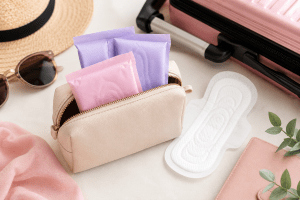
Travel-Friendly Sanitary Pads: Stay Comfortable and Confident Wherever You Go
It can seem difficult to travel on your periods. If you’re traveling to work, going
Healthy hormones are key to our emotions, ability, and success, and nowhere is this more relevant than during menstruation. And it is never too late to get used to your period, knowing that you are not the only one in the process of mastering the entire cycle.
Most women can become overwhelmed by the changes to their bodies, especially at the time of puberty or other life changes that are stressful. Well, here is the good news: once you understand your hormones, you can manage them; you do not fight them.
In this guide, we will break down the basics of hormonal health, critical things you need to be aware of when it comes to understanding and controlling your cycle. And how you can improve and live your best life in any given stage.

Hormones are the messengers that circulate your body, and can have an effect on your mood, energy levels, sleep, digestion, skin and well, yes, your menstrual cycle. The hormones associated with menstruation include estrogen, progesterone, luteinizing hormone (LH) and follicle-stimulating hormone (FSH). When these hormones are in balance, your cycle merrily flows. When they are not, however, you may have irregular periods, mood swings, fatigue or any other PMS symptoms.
Knowledge is power, and this goes particularly with your hormones because knowing how your body works, you are empowered to make appropriate decisions about your health, whether you are monitoring your cycle, eating particular foods, or reduce your stress levels.
And the most frequently asked questions to little girls are the questions like, when does your period start? The initial stage is referred to as menarche, and it occurs when one is between the ages of 9 and 15. But this may change with the genes, food, and health status.
Period symptoms that are likely to come:
It might be strange or frightening because it means your body is developing and changing, but it is also a strong statement that you grow up. You can do it.
The menstrual cycle is not only about the few days of bleeding so to speak, it is about 21-35 days of your body preparing to receive a pregnancy. Knowing about this cycle can help you to monitor your fertility, understand your health problems and be more organized.
The stages of a menstrual period:
What is the best way to tell when you are on your period? Install one of the period tracking apps, such as the Embrace period tracking app, in order to track your symptoms, flow and mood. This will enable you to spot trends and be ready for what is coming.
Whether you are a first-time user of your cycle or have been using it for years, there are still things new to that particular period. The following are some of the truths that are likely to be neglected:
Hormonal health is not just about periods; it is about how your body feels and how it works. These are simple and practical things to give your hormones a hand:
Chronic stress increases cortisol, which causes a disturbance in estrogen and progesterone. Take regular deep breaths, journal, practice yoga or anything that settles your mind.
Of course, 7-9 hours of sleep every night. When you sleep poorly, your hormone production goes awry in many ways, particularly when it comes to melatonin and cortisol production.
Exercising frequently helps the metabolism, lifts the spirits and minimizes PMS. Go out for a walk, do yoga or dance 30 minutes a day.
Your thyroid gland regulates the metabolism of your body, and thus when it does not work properly, it may cause havoc to your hormones.
Have your doctor check your TSH. The normal varying level of TSH in non-pregnant adults is 0.4 to 4.0 mIU/L, respectively. Being higher or lower may reflect that you might have hypothyroidism or hyperthyroidism.
Take a look at an example of Thyroid Medication…
So do not worry, you have hypothyroidism, and you can take a thyroid medication each day such as levothyroxine. It may require trial and error to come up with appropriate dose and time. Give your time during the process and have frequent check-ups.
On the other hand, in the case of hyperthyroid treatments, drugs or surgeries can be proposed to slow down the observably overactive thyroid.
The topic of hormonal health is not a very mysterious one. Regardless of whether you are trying to keep track of the luteal phase of your periods or thinking of when your periods due to commence, it all involves getting to know your body better. Learn this wisdom. Learn to use it to make choices, treat your body intelligently, and be supportive of your emotional health.
Whether you understand how to make the most of menstruation or not, you still cope. Once you know the things to know about menstruation, you are thriving.
It can seem difficult to travel on your periods. If you’re traveling to work, going

Heavy Periods can be tough to manage. Nobody wants to be standing at work or
A good night’s sleep is possible with the right pad only! Nothing interrupts the peaceful
A good sanitary pad can be the difference between a comfortable day and being miserable.
It can seem difficult to travel on your periods. If you’re traveling to work, going
Heavy Periods can be tough to manage. Nobody wants to be standing at work or
A good night’s sleep is possible with the right pad only! Nothing interrupts the peaceful
A good sanitary pad can be the difference between a comfortable day and being miserable.