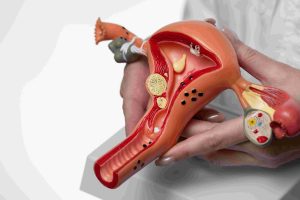
When it comes to menstrual discomfort, fertility issues or cyclical irregularity, these problems are a monthly matter that women should not ignore. And all too frequently, the actual causes of these problems are not particularly well understood.
The endometrium is one of the most important and often unrecognised parts of women’s reproductive health. If you have ever wondered “what is endometrium” and the “purpose of endometrium”, then you are at the right place!
We will discuss knowledge of the endometrium, its structure and role as well as how it affects the health of women. It can help you to make other wise decisions which would benefit your reproductive life. Now, then, let us look at it more closely.

What is the Endometrium?
The lining of the uterus is called the endometrium- it is a soft mucus membrane which serves a critical part in the female reproductive system. When we experience the menstrual cycle, this lining gets thickened and is shed in a cyclical manner every month.
In simple terms, have you ever asked yourself, What is endometrium or searched the endometrium definition, then read this:
The endometrium refers to the lining of the uterus, where it contracts and relaxes due to the changing phases of the menstrual cycle in order to accommodate a possible pregnancy.
This certainly is a vital and dynamic wall that reacts to the action of the hormones, shields the embryo at the time of implantation, and contributes to a considerable extent. So far as the menstrual haemorrhage is concerned.
Anatomy of the Endometrium
Two layers make up the endometrium uterus:
- Functional layer: This is the layer that thickens, holds an egg in case of pregnancy and loosens during menstruation in case it does not.
- Basal layer: This is the lower layer that you have after menstruation, and this restores your functional layer.
These layers are meant to aid in one of the most essential biological processes in the female body, which is reproduction.
What is the Purpose of the Endometrium?
You may ask yourself such questions as, What does the endometrium do, and What is the endometrium function? The following is an analysis of the functions of the endometrium:
Facilitates Implantation of the Embryo: In case of fertilization, the endometrium becomes a friendly environment where the embryo implants and starts to develop.
Menstrual Cycle Regulation: The endometrial lining is shed when there is no pregnancy, which causes a menstrual cycle.
Responds to Hormones: Hormones, or the important reproductive ones, estrogen and progesterone, stimulate the endometrium to grow and shed.
Endometrial Reproductive Health Purpose
Reproduction is the main reason for the existence of the endometrium. A properly functioning endometrium guarantees that the fertilized egg will have the appropriate conditions to develop and grow.
Actually, most fertility problems are connected with problems with the endometrium-it is too thin, or thick, or has structural problems. Knowing this can help women research options to conduct therapies and lifestyle changes that will promote endometrial health.
Endometrium Function During the Menstrual Cycle
In this case, operation of endometrium in the four stages in menstrual cycle can be understood as follows:
Menstrual Period (Day 1-5)
In this stage, the lining of the uterus is stretched out, causing a menstrual period. This occurs in cases when one is not pregnant, but the pregnancy has not taken place.
Follicular (Days 6-14)
The estrogen levels increase, and the lining of the uterus begins to be restored. The lining becomes thicker in readiness for the potential conception.
Ovulation Day (Day 14)
There is the release of an egg by the ovary. The endometrium also gets more and more receptive to a fertilized egg.
Luteal Phase (Day 15-28)
The process is then replaced by progesterone, which stabilizes the endometrial lining. In case of no pregnancy, the levels of the hormone decrease, and the cycle repeats.
Role of Healthy Endometriosis in Fertility
The endometrium is very important and has to be healthy to conceive. Here’s why:
Implantation: An egg that has been fertilized has to be implanted in the uterus lining in order to produce a pregnancy. This can be prevented by a too-thin or an inflamed endometrium.
Hormonal Balance: The hormones influence the endometrial receptivity. The disruption of this can be in the form of conditions such as PCOS, estrogen dominance, or low progesterone.
Chronic Conditions: Chronic conditions such as endometriosis, fibroids or continuous inflammation can alter the organization of endometrial tissue and decrease their fertility chances.
Women with difficulty in conception usually have to undergo a transvaginal ultrasound and or biopsies to determine the thickness and quality of the endometrial lining.
The Uterus Endometrium, Daily Period Health
There are instances when alteration of endometrial changes can result in:
- Heavy or irregular periods
- Excessive Pain
- Inter-cycle spotting
- In rare cases, it causes endometrial cancer.
It is essential to ensure one uses comfortable menstrual products during this period to enhance wellness. However, Maxi Thick Pads are the most efficient in controlling heavy flows as they are highly absorbent and also provide wearers with long-term comfort.
What to Do to Have a Healthy Endometrium?
To support the health of the endometrium
- Eat an inflammation-reducing diet high in leafy greens, anti-inflammatory healthy fats containing antioxidants.
- Keep the balance of hormones by avoiding stress and sleeping well.
- Do not be exposed to toxins contained in some makeup and cleaning agents.
- Observe periods, and in case something does not feel right, visit a gynecologist.
- The supplements, which may enhance endometrial thickness, are Vitamin E, and Omega-3s.
FAQs
How Does the Endometrium Change During the Menstrual Cycle?
Its thickness varies with estrogen during the follicular half of the cycle, making it receptive to implantation later on after ovulation. In case no fertilization is done, it is shed off during menstruation.
Can the Endometrium Affect Fertility?
The answer is yes, when the endometrium is too thick, too thin, or with inflammation, it can hinder implantation of the embryo, making getting pregnant in this case hard.
What happens to the endometrium during menstruation?
The endometrium sheds, or sheds, its top (functional) layer, and it is discarded from the body as menstrual blood.
How Does Estrogen Affect the Endometrium?
During the earlier part of the cycle, estrogen promotes the endometrium to grow to a thickness that gives it a high chance of implantation.
What Are Symptoms of an Unhealthy Endometrium?
The symptoms are: irregular bleeding, a missed period, severe pain, and spotting. These may be indicators of hormonal imbalance, polyps, fibroids, or worse conditions.
Coclusion
Because it is only a single component of the uterus, the endometrium deserves a greater role in reproductive health and the menstrual cycle and fertility. Knowing what it is, what it does and how to take care of it can help in better managing the health of women.
Hopefully, now, you no longer need to ask, What is the endometrium? And what does the endometrium do? Make your health a priority and attend to your menstrual cycle, use a comfortable menstrual care product, such as Maxi Thick pads, and refer to a professional health specialist when necessary.